
Ceiling Fan Installation Done Right: Cooling New Orleans Homes Efficiently
New Orleans summers are brutal. Between the heat and humidity, your air conditioner works overtime, which means your electric bills spike. A properly installed ceiling fan won’t replace your AC, but it can work alongside it to circulate cool air more efficiently through your home. Ceiling fans move air in a way window units can’t reach, helping you feel more comfortable while potentially reducing what you pay for cooling each month. The key is installing it correctly, with the right electrical support and proper mounting technique. That’s where a licensed electrician comes in. Whether you’re adding a new fan or replacing an old light fixture, getting the installation right prevents safety hazards and ensures your fan runs smoothly for years without wobble or noise.
WHY CEILING FANS WORK IN NEW ORLEANS’ HUMID HEAT
 Ceiling fans circulate air throughout a room, which helps distribute cooled air from your AC more evenly. In New Orleans’ hot, humid climate, this air movement can make a room feel up to 5 degrees cooler than it actually is, even though the fan doesn’t lower the temperature itself. A fan running overhead pulls hot air up and pushes cooler air down where you’re sitting. Combined with your air conditioning, this circulation reduces strain on your system. Your AC doesn’t have to run as constantly to maintain comfort. Over time, this efficiency can lower your energy bills during the summer months. Many homeowners in New Orleans use ceiling fans in every room, especially in bedrooms where good air circulation improves sleep quality during sticky nights.
CHOOSING THE RIGHT SIZE AND DOWNROD FOR YOUR SPACE
Fan size matters for performance. A fan too small won’t circulate air effectively. A fan too large can waste energy. For most bedrooms in New Orleans homes, a 42-inch fan works well. Larger living rooms benefit from 48-inch to 56-inch models. Use a 36-inch fan for rooms under 75 square feet, 42-inch for 75 to 144 square feet, and 52-inch for larger spaces. The downrod (the pipe connecting fan to ceiling) length also matters. Standard downrods are 4.5 to 12 inches. Higher ceilings need longer downrods to keep blades at least 7 feet above the floor for safety. Too short a downrod risks head injuries. A licensed Electrician can recommend the right size and downrod length for your home.
FAN-RATED ELECTRICAL BOXES AND WIRING ESSENTIALS
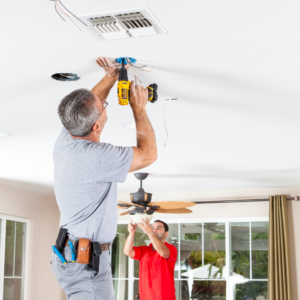 Never hang a ceiling fan from a standard light fixture electrical box. Fans vibrate during operation and require additional support that regular boxes don’t provide. You need a fan-rated electrical box, which is reinforced and mounted differently to handle the fan’s weight and movement. These boxes connect to framing, not just drywall, so they support the 15 to 50 pounds a typical ceiling fan weighs. Improper wiring or insufficient support causes wobbling, which creates noise and eventually damages internal components. Your electrician installs the fan-rated box correctly, runs proper wiring to handle the fan’s electrical load, and ensures everything meets local electrical codes. In New Orleans, electrical work requires a licensed electrician to keep your home safe and to pass inspections if you’re selling or refinancing.
WIRING, SWITCHES, AND REMOTE CONTROL OPTIONS
Ceiling fan wiring may require a dedicated circuit breaker, especially with a light fixture attached. A standard wall switch works, but a three-speed switch offers flexibility to run on low or high. Many homeowners prefer remote-controlled fans for easy speed and direction adjustments. Some remotes include dimmer switches for attached lights. Your electrician determines which control option suits your wiring and installs it properly. Smart fans with app-based control are also available, though installation varies by model.
REPLACING A LIGHT FIXTURE WITH A CEILING FAN
If you’re converting an existing light fixture to a ceiling fan, have an electrician evaluate the installation first. Is the existing electrical box fan-rated, or will it need replacing? Can the wiring handle the fan’s demands? How’s the ceiling framing around that location? Sometimes the existing light fixture isn’t positioned ideally for a fan. The electrician can move the electrical box to a better spot if needed, though this takes more time and expertise. Never assume a light fixture’s box can handle a fan. That’s one of the most common sources of ceiling fan failures and safety problems.
BLADE DIRECTION AND SEASONAL ADJUSTMENTS
Most ceiling fans have a reversible motor that changes blade direction. In summer, set blades to rotate counterclockwise (forward). This pushes air downward, creating a breeze that makes you feel cooler. In winter, reverse the direction to clockwise (backward). This pulls cool air up and pushes warm air that’s collected near the ceiling back down into the living space, which helps your heating system work more efficiently. Your fan’s remote or switch includes a direction button. It takes seconds to flip once the seasons change.
WHY PROFESSIONAL INSTALLATION PREVENTS PROBLEMS
Wobbling is the number one complaint from ceiling fans installed incorrectly. Wobble comes from unbalanced blades, improper mounting, or an undersized electrical box. It’s annoying and ultimately dangerous. A licensed electrician ensures the fan is properly braced, balanced, and supported. They verify the electrical box is rated for fans, that wiring is correct, and that everything is secure. Professional installation also prevents electrical hazards like overloaded circuits or loose connections that could cause fires. Your investment in a quality ceiling fan is protected when installation is done right from the start.
READY TO INSTALL A CEILING FAN IN YOUR NEW ORLEANS HOME?
Installing a ceiling fan correctly requires knowledge and proper tools. MK Electric Man is a licensed electrician serving New Orleans with expert ceiling fan installation and electrical work. Visit www.neworleanselectricians.com to schedule a consultation. Let a professional handle installation so you can enjoy efficient cooling throughout Louisiana summers.